Bringing home a young puppy, active kitten, or newly adopted rescue pet fills the household with excitement alongside practical care puzzles. New pet owners regularly walk down retail pet aisles feeling dizzy before towers of plush squeakers, latex balls, and feather wands. Eager to please their new companion, novices frequently spend significant budgets on accessories that the animal ignores after one sniff or chews into plastic ribbons within twenty minutes.
Choosing proper play accessories demands a balance between cognitive stimulation and physical protection. Growing puppies examine surroundings through relentless mouth exploration, targeting table legs, baseboards, and leather footwear. Newly adopted indoor cats crave athletic motion to prevent midnight hallway sprints. Well-built play gear channels natural predatory drives into structured daily habits, saves household furnishings from damage, and prevents traumatic visits to emergency veterinary clinics.
Building a Balanced Starter Kit: The Core Five Categories
Experienced animal trainers suggest limiting initial purchases to five functional groups rather than filling carts with random novelties: an interactive food dispenser, a resilient chew piece, a guided wand toy, a comforting plush companion, and a textured scent mat. This foundational setup addresses primary predatory instincts without turning living room rugs into obstacle courses.
A puzzle dispenser taps into ancestral foraging routines and slows down meals for fast eaters. A resilient chew piece exercises developing jaw joints and eases dental discomfort. An interactive wand teaser builds positive human bonds during structured play. A gentle plush item offers comforting warmth during quiet crate rest. Finally, an olfactory snuffle mat promotes calm neurological states following stimulating outdoor strolls. Starting with these five foundational tools keeps your companion mentally engaged throughout every stage of the day.
Teething Pups and Small Chewers: Calming Treat Rollers
Young canines endure significant gum tenderness as twenty-eight needle-sharp milk teeth loosen and forty-two adult teeth take root between twelve and twenty-eight weeks of age. Throughout this teething period, puppies gnaw on anything within mouth reach to relieve throbbing gum tissue. Offering hard synthetic bones meant for mature working breeds risks fracturing soft puppy enamel. Evaluating puppy vs adult dog toys means picking pliable compounds that give slightly under tender bites.
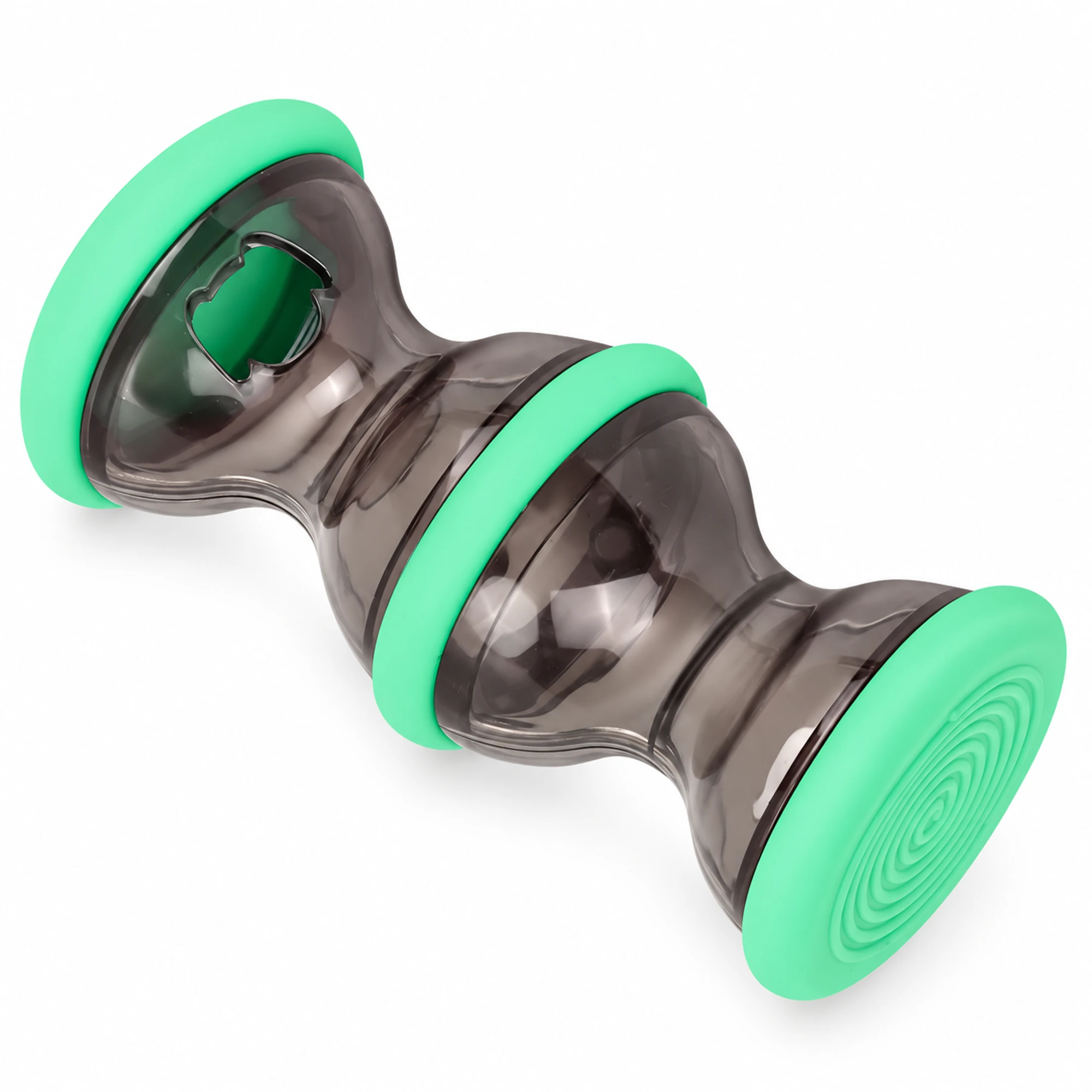
The Mint Roll and Reward Small Dog Toys ($11.30) provides a dedicated starter station for teething puppies and toy breeds. This small rolling device pairs a grooved mint-scented rubber outer shell with a transparent inner food chamber. When a pup paws the cylinder along the floor, dry kibble kernels fall through adjustable exit slots.
The soft rubber ridges covering the cylinder massage irritated gums and clear away soft plaque deposits. Fresh mint extract naturally sweetens breath without harsh chemical additives that might overwhelm sensitive canine noses. The transparent center allows curious puppies to watch food rattle inside, teaching spatial problem solving through gentle trial and error. Measuring twelve centimeters in length, the roller rests comfortably between small paws without frustrating petite companions.
Olfactory Enrichment and Slow Feeding: Snuffle Mats
Canines interpret the world through scent before visual input. A canine snout houses up to three hundred million scent receptors, compared to six million in human nasal passages. While thirty minutes of ball retrieval strengthens leg muscle groups, thirty minutes of scent tracking engages broad neurological zones across the canine brain, easing separation distress in unfamiliar rooms.
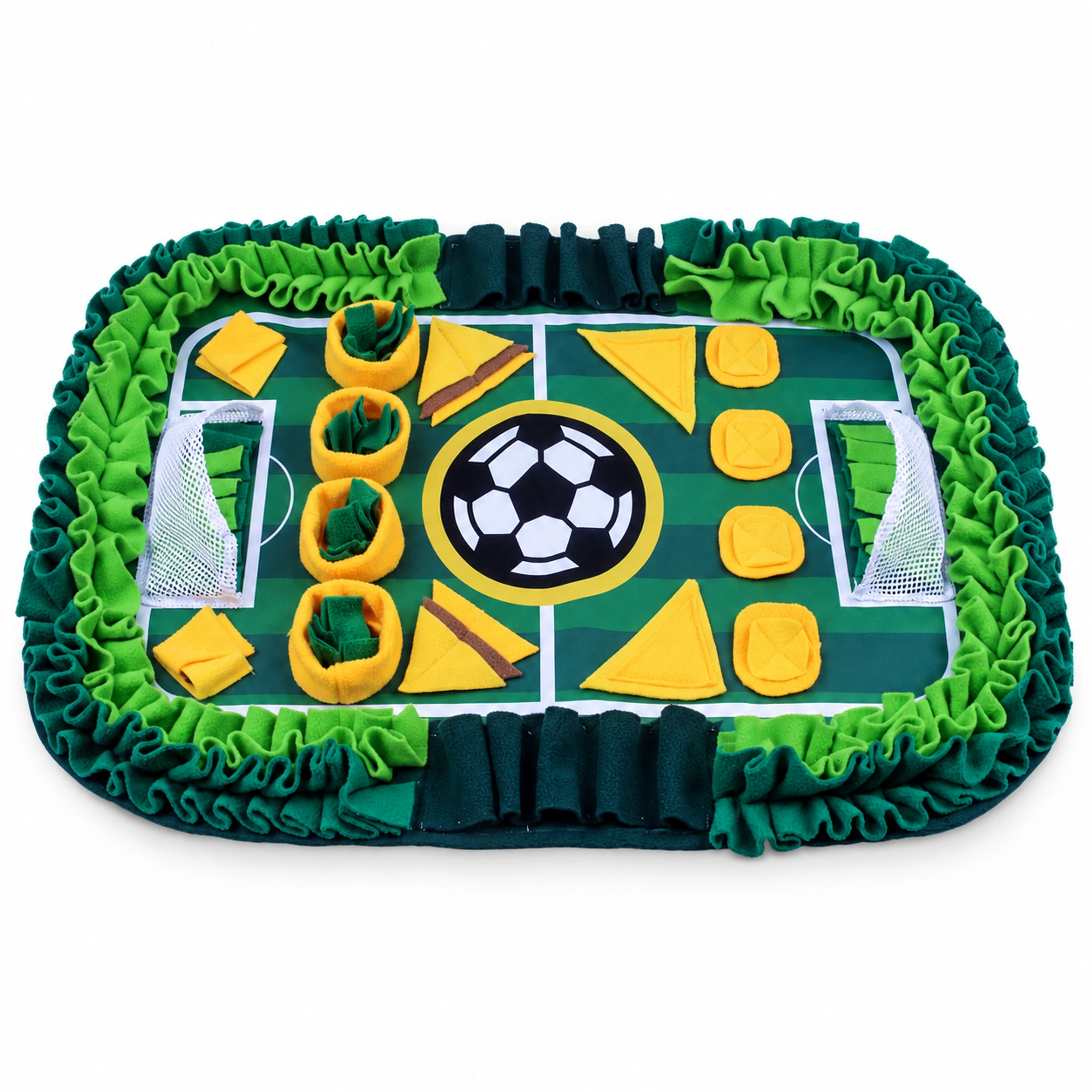
The Football Pocket Snuffle Mat ($35.00) changes everyday kibble consumption into a peaceful mental hunt. Made with dense fleece fabric and sturdy polyester backing, this foraging mat features tiered fabric grass strips, soft goal pockets, and concealed fleece pouches designed to hide dry kibble or dried meat treats.
A dog relies on their damp nose pad and claws to push aside fabric folds, sniff out buried snacks, and extract rewards piece by piece. This steady search stretches an otherwise hasty meal into a relaxed twenty-minute mental exercise. Non-skid rubber backing anchors the fabric platform on polished floor surfaces, stopping energetic dogs from sliding into furniture during play. Washable materials simplify cleaning after messy weekly treat searches.
Bonding Through Interactive Play: Safe Wand Teasers
Interactive wands provide an ideal channel for first-time owners to earn trust with cautious kittens or timid rescue felines. Guiding a feather cluster or plush ball allows pet parents to control speed, copy insect skips, and lead cats through stalking, crouching, dashing, and catching. Keeping human hands separated from the target teaches young felines that human fingers are never biting toys.
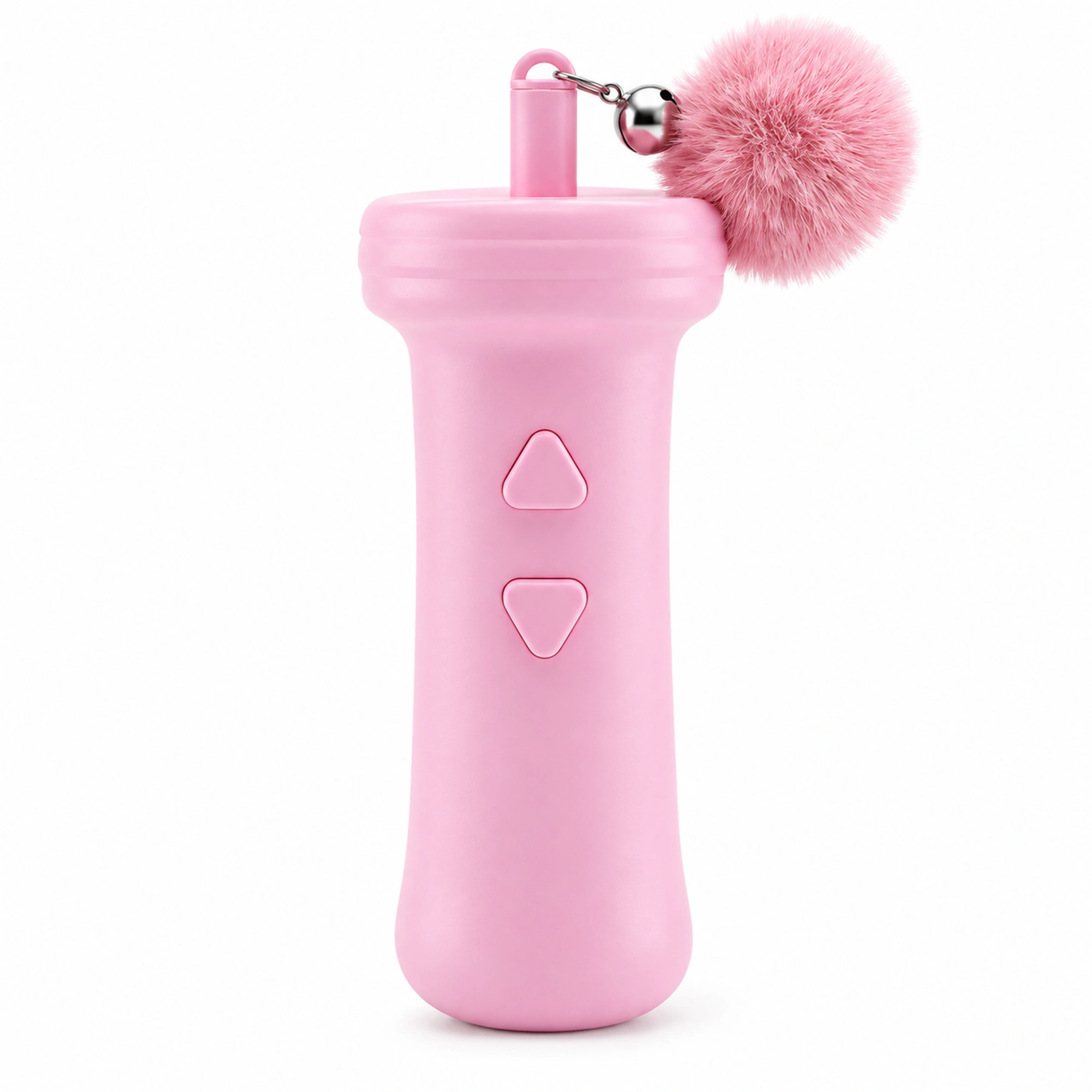
The Pink Launch and Reel Cat Teaser Wand ($17.30) refines interactive cat sessions through durable mechanical engineering. Unlike flimsy wooden rods with fixed strings that break on hard tugs, this wand incorporates a spring-assisted line winder and an extendable rod. Owners can release line slack to let a soft pom glide across rugs, then reel the lure backward with controlled tension.
The flexible wand tip bends to absorb sudden leaps when an ambushing cat strikes. Durable braided nylon line prevents claw snags, while the soft pom-pom protects feline teeth during hard catches. Guiding your cat through two ten-minute play intervals every evening satisfies nocturnal hunting urges, reduces nighttime meowing, and reinforces friendly household bonds.
Solo Play in Confined Spaces: Compact Apartment Track Toys
First-time adopters in city apartments frequently worry that tight square footage will cause feline boredom during work shifts. Cats certainly enjoy open floor space, but vertical access and kinetic movement matter much more to indoor felines than wide floor layouts. Choosing dependable apartment cat toys demands gear that locks motion targets within a neat physical footprint.
The Cream Cloud Butterfly Cat Toy Track Station ($39.90) provides self-contained entertainment inside compact studio flats and small apartments. This stacked station contains concentric running tracks that trap lightweight rolling balls. As a cat paws at a ball, the sphere glides swiftly around the smooth channel, producing soft clicks without grating motor sounds.
Positioned over the stacked channels is a flexible wire wand supporting a realistic fluttering butterfly lure. This combination lets indoor felines switch between batting grounded spheres and jumping for hovering wing decoys. Broad silicone base pads keep the thirty-centimeter footprint steady on smooth floors during enthusiastic attacks. Because every sphere stays locked in place, pet parents avoid kneeling to rescue lost toys from under low sofas.
Essential Beginner Safety Checklist
First-time guardians need to review physical hazard factors before leaving any toy alone with an unsupervised pet. Emergency surgical clinics regularly treat intestinal blockages caused by detached squeaker units, swallowed foam, and tangled cords. Finding safe dog toys starts by applying a consistent pre-purchase inspection protocol.
The Five Point Toy Inspection Protocol
-
Sizing Evaluation: Confirm that every ball or chew accessory exceeds the width of your dog throat. Any item small enough to slip past the rear molars poses a catastrophic choking risk.
-
Component Durability: Tug hard on attached squeakers, plastic eyes, and ribbon trims before purchase. If a decorative piece tears free under moderate hand pull, an eager pet will sever it with teeth in moments.
-
Material Composition: Choose toys manufactured from resilient natural rubber, food-grade silicone, or untreated cotton rope. Avoid fragile plastic items that carry chemical phthalate plasticizers.
-
Surface Texture: Check rigid plastic edges for sharp molding seams that could cut tongue tissue or tender gums.
-
String Length: Keep unmonitored dangling cords under thirty centimeters, or lock string wands securely inside hallway closets between shared sessions.
Inspection Guidelines and Replacement Schedules
Play items suffer gradual wear, and letting animals play with fractured equipment risks serious internal injuries. New owners should make a weekly habit of checking every toy in the home. Learning when to replace dog toys shields your companion from accidental swallowing and painful gastrointestinal surgery.
Clear Signals That a Toy Must Be Discarded
-
Splitting Rubber Walls: Toss out hollow rubber treat toys whenever deep splits appear along outer surfaces. Sustained chewing can shear off large chunks that obstruct the stomach.
-
Exposed Internal Squeakers: Discard plush squeaker items immediately when seams rip and plastic sound capsules show through. Dogs concentrate bites on squeakers to kill the sound, frequently swallowing the capsule in excitement.
-
Frayed Rope Strands: Throw out rope toys when woven fibers loosen into long dangling strings. Swallowed threads can cut through intestinal tissues, triggering emergency surgical intervention.
-
Cracked Ball Channels: Examine cat track towers for split plastic edges that could trap kitten claws or tear paw pads during fast swiping.
-
Missing Chew Toy Segments: Check chew bones regularly against their original dimensions. When an item loses one-third of its starting length, replace it with a fresh unit so the small end cannot choke your pet.
Soaking durable toys weekly in warm water with mild detergent washes away dried saliva and surface bacteria. Let all fabric and rubber items dry completely before placing them back into toy baskets to prevent mold growth.